
Build a Monroe County Former-Owner Timeline
Work from the newest recorded conveyance backward. In it, the current owner of record appears as grantee. Find that person listed as grantee in an earlier deed. Then step back again. Treat the table as a chain of title. Enter each row from the actual instrument. Keep the deed type and recording key intact every time.
| Transfer Date | Grantor to Grantee | Deed Type | Book/Page or Document |
|---|---|---|---|
| Newest located date | Prior owner to present grantee | As indexed | Exact current reference |
| Earlier acquisition date | Earlier grantor to prior owner | As indexed | Exact prior reference |
| Book-era date | Handwritten parties as recorded | Instrument or will | Liber and page |
The Register search page reports remote and in-house records back to 1976, while the name index starts January 1, 1981. That gap matters. A 1976 to 1980 record may need a document or book reference, since images and the name index do not start on the same footing.
Use Monroe County Grantor-Grantee Fields
Tapestry EON searches on party names, document number and type, date ranges, parcel number, subdivision, lot, block, tract, book/page, section, township, range, and quarter. Search one acquisition at a time. A percent wildcard rescues partial spellings, including some apostrophe names. EON can return duplicate-looking rows when multiple parties are indexed to a single instrument. Results stop at the first 300. Each party-name search can carry a charge, so narrow any common name first. Printed document images cost separately. When a chain cannot be proved remotely, the Register counter is the fallback. The county deed-search page shows where Monroe County prior-owner research enters the recorded system: Register search page.
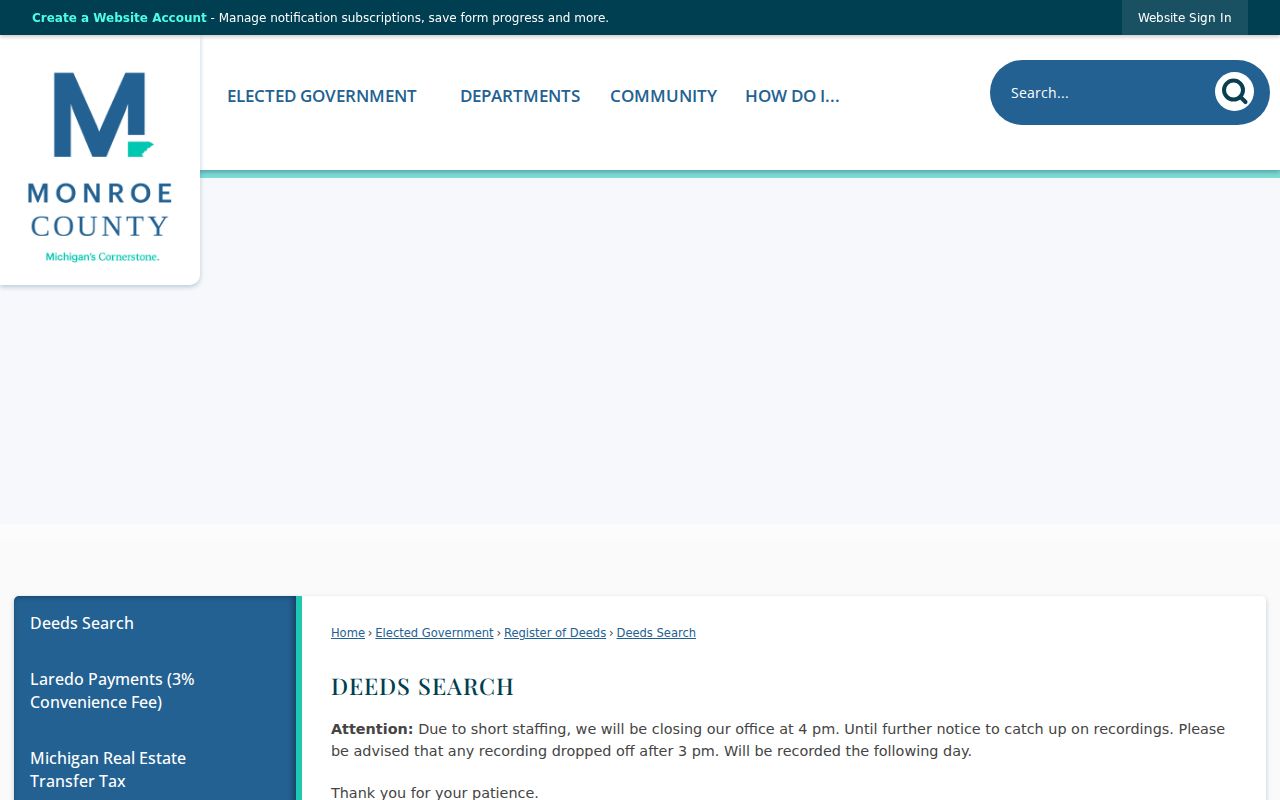
Note: The page also preserves the current coverage statement that belongs with any conclusion about the online cutoff.
Reconstruct Monroe County Ownership Deed by Deed
Start from a verified parcel with its full legal description. A matching address or a shared surname proves nothing. At every step in Monroe County, compare the parties, the parcel reference, the land description, and the date. Only then step back to an earlier deed. A replat, split, combination, annexation, or acreage change counts as an ownership event. So record it in the timeline like any transfer.
- Locate the present grantee's acquisition deed and copy its grantor, description, date, and reference.
- Search that grantor as a grantee in an earlier date range and inspect the candidate deed.
- Confirm that the same land passed, noting any parcel or description change.
- Repeat to the name-index cutoff, then carry the last book/page or party into older volumes.
- Grantor and grantee
- The party conveying and the party receiving the interest described.
- Chain of title
- The ordered series of instruments through which an interest passed.
- Reverse index
- An index route that finds conveyances through grantors rather than only recipients.
- Quitclaim and warranty deed
- Different forms whose effect must be read from the instrument, not guessed from a row.
When an earlier owner of record disappears from the chain, look harder before giving up. Try alternate spellings, initials, married names, trusts, and estates. Land contracts, tax sales, and foreclosure records also occur. These also break clean sequences in Monroe County property records. Once the gap is resolved, re-enter the deed index and continue back through the chain.
Instrument type matters too. A mortgage, assignment, discharge, lien, lis pendens, easement, or right-of-way appears in the index. Such documents can name parties without conveying the fee interest. Even a labeled deed deserves a close read of its granting language and description. The ownership timeline should reflect the transfer each document actually made. It should not reflect every indexed name found along the way.
Continue Former Owners into Monroe County Libers
The earliest Monroe County deeds sit in handwritten books called libers. The Library of Michigan Monroe guide identifies Deed Libers A, B, and C covering March 21, 1806 through May 21, 1818. These volumes can hold parties, descriptions written without street names, witnesses, consideration, and even wills recorded alongside an index.
A will inside a deed book may solve an old mystery. It can explain why an early owner of record vanished from ordinary deed results. The sound method is to trace the current description back to the earliest modern book reference, then request the older volume rather than leaping straight from an address to an 1800s name.
For these Monroe County sources, the state library guide is the documented route:
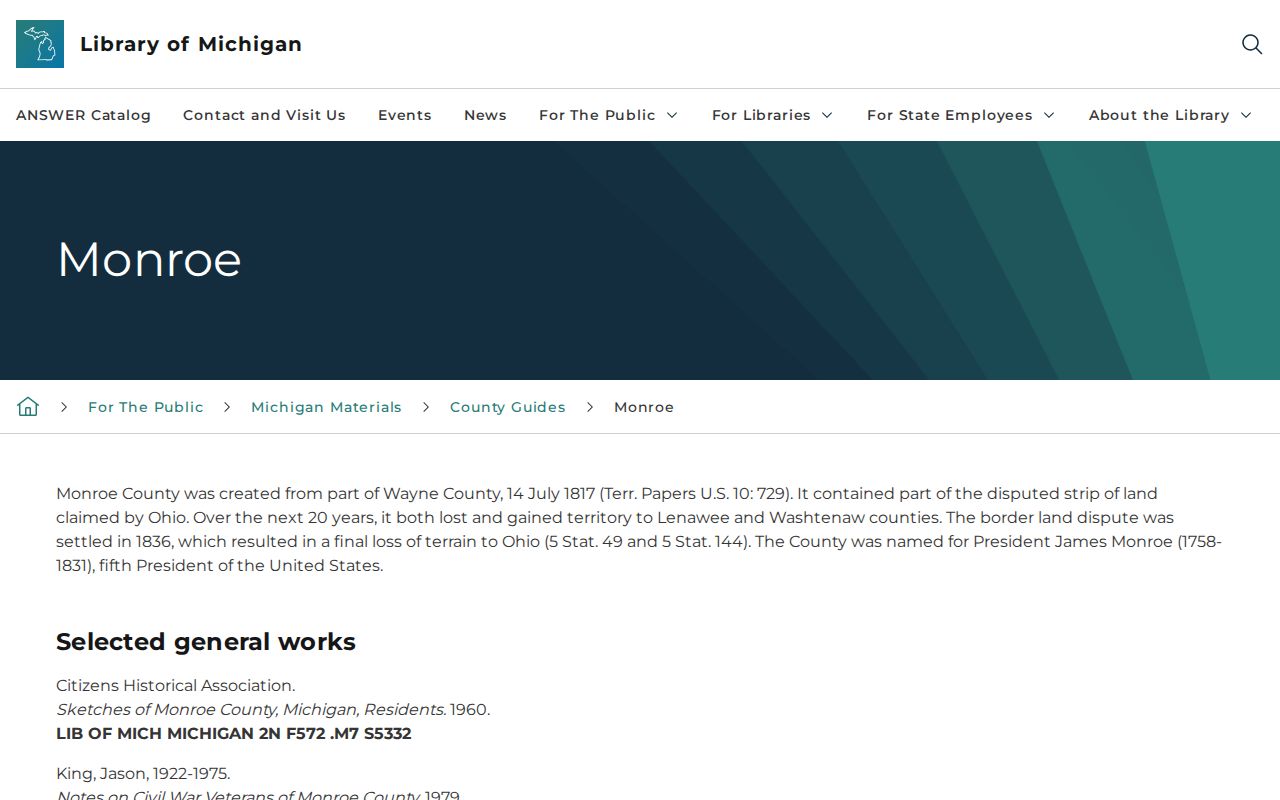
The guide also lists maps and atlases that tie old legal language to a modern parcel.
Bridge Monroe County Owners with Plats
An old address in Monroe County may have been renamed or renumbered. It may also have been annexed or extended over the years. Platted land deserves care. Keep the subdivision, lot, block, and replat language intact when you copy a description. For rural parcels, hold onto the section, township, range, quarter call, and acreage. The Library of Michigan guide points researchers to county atlases from 1859, 1876, and 1896. It also notes a 1984 first-landowners atlas. Those volumes tie names to places across generations of Monroe County settlement.
Atlases connect people and property, but they cannot replace the transfer chain itself. A GIS map will show today's parcel polygon. Yet the plat and deed records show how the tract was first created and later conveyed. Watch for splits. A parent parcel number can linger in a former owner's deed. Meanwhile, the child numbers appear on the current tax roll. That mismatch trips up many searches.
Historic directories and newspaper mentions help when a road changed names. They also help when two residents shared one. Assessor history can likewise link an earlier situs address to a present parcel number. Treat each source as corroboration, nothing more. Once a likely identity emerges, go back to the recorded instrument and its full legal description. That final step keeps an appealing house-history tale from hardening. It prevents a story no Monroe County deed supports.
Note: Write down every legal-description change, not merely each person, because the land may not remain within one tax parcel.
Resolve Monroe County Ownership Gaps Through Probate
A death can transfer a property interest. No seller-to-buyer deed may show up in the index. Monroe Probate Court handles estates and the permissions that govern estate real property. Search its permitted case data and ask the clerk about inspecting files. Then match any personal representative's deed or distribution order back to the Register of Deeds.
Older gaps call for wider digging. Wills indexed inside deed books can help separate residents who shared a name. Probate holdings, cemetery records, newspapers, and city directories can help too. Remember the limit, though. A probate case alone never proves land changed hands. Only the recorded instrument closes that segment of the ownership chain.
Work Around Monroe County's 2026 Archives Closure
Monroe County archives close for construction in 2026. The Monroe County Museum reports obituary research pauses as well. That is an access limit, not the end of prior-owner research. House history still has solid paths. The Library of Michigan, the Archives of Michigan, and the Monroe County Library System's genealogy databases and microfilm all remain available. The Bedford Branch Local History Room holds land abstracts. A written request can also reach an identifiable nonexempt record. The record must still sit with a county office.
The Bedford collection shines for land abstracts. Its abstracts are arranged by section or owner, alongside local directories and microfilm. State archive and library finding aids help too. They can show whether a volume was transferred or filmed. Ask for a named record series with its date span. Carry the last known Liber and page into the request. That detail gives staff a concrete bridge from the modern deed chain.
Measure Monroe County Ownership Record Depth
How deep do Monroe County property records go? The online name index starts in 1981. Stated recorded coverage reaches back to 1976. Identified deed books extend into 1806, though these milestones describe access rather than a promise that every owner of record appears online.
Monroe County was created in 1817 from Wayne County. Its territory kept shifting for two decades after that. The Ohio strip dispute did not end until 1836. An older parcel may therefore point to a predecessor jurisdiction, a federal patent, a township description, or land now sitting outside the county. Verify the historic geography first. When the local book trail leaves current borders, Archives of Michigan finding aids can pick it up.
A deed chain can also break at a tax sale, land contract, railroad or utility easement, foreclosure, or replat. None of those fits an ordinary purchase sequence. Mark the event, locate the controlling file, and then resume with the next recorded grantee, which keeps the former-owner history honest about both the people and the legal mechanism that changed each interest.
Online coverage is not the full history. The name index starts in 1981. Continue older former owners through document references, deed books, plats, probate, libraries, and archives.
These Monroe County records serve house history, estate questions, title diligence, and boundary work. Never use them to harm a living person.