
Find a Monroe County Property Owner
The method is simple. Move from address to local assessment record, then to the latest deed. Pick the right city or township. BS&A hosts rolls supplied by Monroe County municipalities, and a Milan mailing address can even fall on the Washtenaw County side, so confirm the county before trusting a result as the right parcel.
- Choose the correct municipality in BS&A Monroe County and search the situs address.
- Copy the Name shown, exact parcel/reference number, and any separate mailing address.
- Search that party and parcel in the Register index, then identify the newest deed and grantee.
- Follow an entity, trust, or probate branch if the recorded grantee is not an individual.
The roll is a fast owner clue. A newly recorded deed is stronger evidence that a conveyance was completed, but neither public lookup replaces a title examination.
Read Monroe County Owner Name Clues
The official BS&A guide labels the public field Name. It ties a name to a parcel. List View shows columns for Name, Reference #, Address, and special flags. The county itself warns you. Tax-roll names may or may not be owners. So until the deed is checked, call the entry the Name or owner shown on the parcel record. Treat it as a clue rather than a conclusive legal owner.
| Input | Owner-search use | Recovery tactic |
|---|---|---|
| Municipality | Select the government supplying the roll | Do not rely on mailing city alone |
| Address | Find the parcel from its situs | Broaden or try an address range |
| Name | Find parcels tied to a person or entity | Try initials, trust, estate, or company form |
| Parcel Number | Match assessment, GIS, and deed references | Preserve spaces, dashes, and suffixes |
Unclaimed detailed records can carry access charges. An account holder may claim up to five properties without charge. The owner name stays unchanged. If the online data looks wrong, ask the local assessor, and County Equalization can route countywide questions.
The official BS&A landing page starts the route.
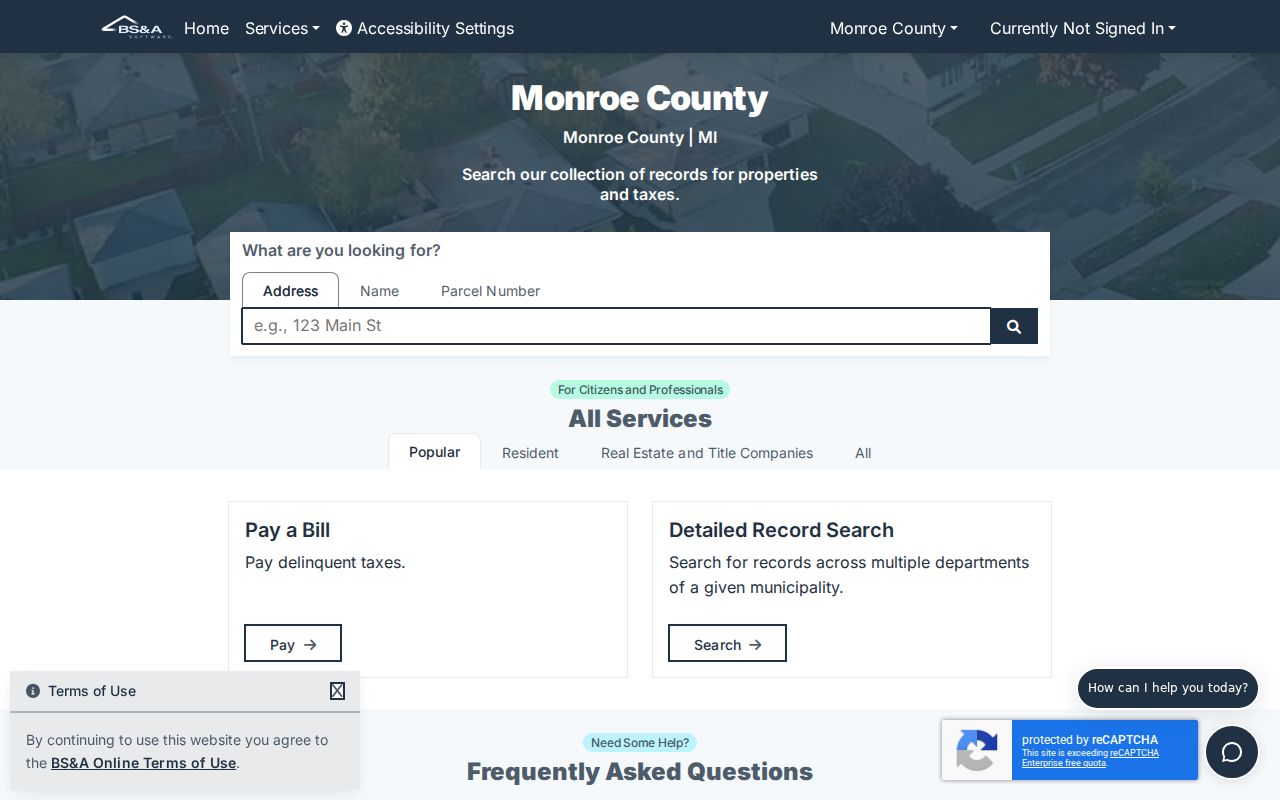
The official page shows the right search hub. The current name comes from the chosen municipality's parcel result.
Trace Monroe County Property Ownership
Many systems can show a name on a parcel. Each was built for a different purpose. Ask what the source proves. An assessment roll supports valuation and billing, a deed records a conveyance, GIS joins attributes to a polygon, and a business filing describes an entity rather than the land.
| Where Ownership Is Shown | What It Gives | How Current |
|---|---|---|
| BS&A assessment roll | Name tied to parcel, reference number, address, values, and available tax tabs | Local cycle; GIS says assessment data update biannually |
| Register of Deeds | Latest deed, grantor, grantee, recording date, type, and reference | Best public clue to a newly recorded transfer |
| County GIS | Polygon, Parcel ID, and linked property attributes | Exchange reviewed weekly; source fields have separate cycles |
| Michigan business registry | Entity filings, certificates, and registered contact | Explains a named entity, not title to land |
The occupant can differ from every listed name. Records do not prove who lives there. A tax-mailing address can point to a post office box, a manager, or an owner elsewhere instead of the physical situs.
- Owner of record
- The party shown by a named, dated public record.
- Grantee
- The party receiving the interest described by a deed.
- Title
- Legal rights in property, which an online name result does not settle.
- Situs versus mailing
- The property's physical location versus the place designated for notices.
Confirm Owners with Monroe County Deeds
The Monroe County Deeds Search sends occasional users to Tapestry EON and frequent users to Laredo. Remote and in-house records reach 1976. The name index begins January 1, 1981. Search the parcel-record Name as a grantee. Narrow by parcel, date, document type, or legal-description fields. EON can show duplicate-looking rows because multiple parties are indexed to one document.
It also returns only the first 300 results. Party-name searches and printed images carry fees. Narrow a common name before purchase. The Register counter at 51 S Macomb Street in Monroe, 734-240-7390, handles older books, certified copies, and searches that cannot be settled remotely.
Use the deed's complete legal description as the identity check. Parcel numbers change after a split, combination, annexation, or replat, and an older document may retain a parent identifier. City land can be bridged by subdivision, lot, and block, while rural descriptions lean on section, township, range, quarter, and acreage. A matching surname without matching land is not confirmation.
Note: Monroe County publishes no fixed closing-to-roll delay, so date both records and prefer the just-recorded deed after a sale.
Identify Monroe County Entity Owners
An LLC grantee needs one more step. Search its exact name through the Michigan business registry resources. Filed documents, entity status, and registered contacts may identify whom to approach. A registered office is not the parcel situs. Nor should an organizer or agent be called the property owner just for appearing in an entity filing.
Trusts complicate things. A trust may appear without disclosing beneficiaries, and an estate can interrupt the direct owner route. Search the allowed Monroe Probate Court records by decedent or estate. Then return to the Register for any resulting conveyance. A probate case or permission to sell does not itself prove a deed was completed.
Permit applicants are not owners either. A local planning or building record can name a developer, contractor, or authorized applicant. It explains property use, but the assessment clue and latest recorded conveyance still answer the public ownership question. Keep the capacity written after a name. Trustee or personal representative explains why the person appears.
Monitor Monroe County Owner Filings
With a name and parcel ID in hand, the county's Property Fraud Alert can watch either identifier for possible recorded activity. A notice means a matching document may have been recorded. It does not decide fraud occurred. It does not establish title or replace title insurance. Compare the alert with the actual instrument. Contact the Register about an unfamiliar party or description.
The official enrollment screen shows the service linked to Monroe County.
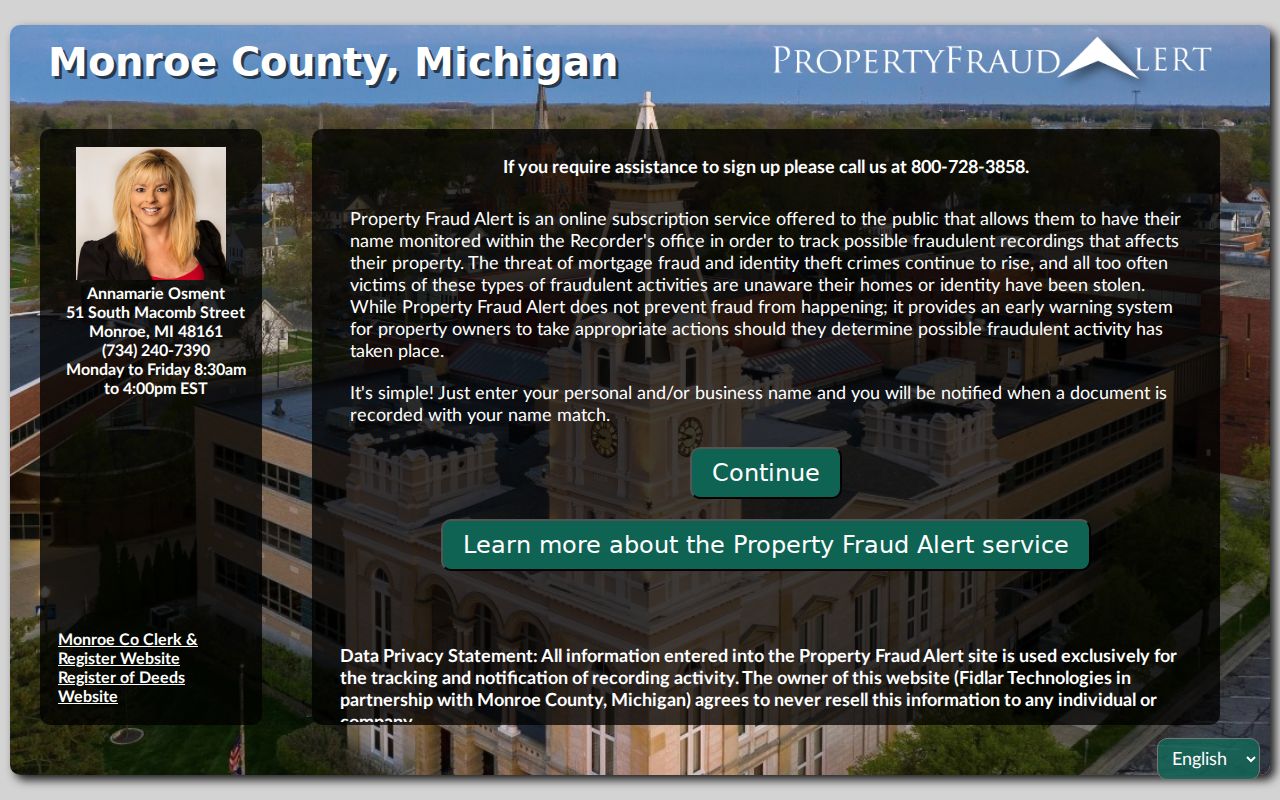
Keep the recording number and image with the alert. That lets a title or legal professional review the specific filing.
Continue Monroe County Owner Research Offline
A dead end online does not mean the record is missing. Start with the local assessor. The assessor can confirm the municipality and the roll entry for the parcel. County Equalization, at 51 S Macomb Street and 734-240-7235, adds countywide assessment and mapping context. At the Register counter you can view recorded instruments, older deed books, and certified copies on request.
When a county record exists but is not published, a written Michigan FOIA request is the next step. Describe the parcel, the date range, the office, and the record type. Be clear about limits, though. FOIA will not make the office research title for you. It will not override court-access rules. It also will not release records another law protects.
Ownership from earlier eras may live in deed books, library microfilm, or Archives of Michigan finding aids. Save that historical dig for after the current-owner method yields a verified legal description. Work backward from the modern parcel, carrying its deed references with you. Ask the custodian for a specific volume rather than a broad sweep. Requests for everything about an address tend to miss records. Some records are filed only by party name or legal description.
Know Monroe County Owner Lookup Limits
Each source answers a different question. An assessment Name is not a title opinion. A deed-index row is not the full instrument. A GIS label is not proof of possession. Michigan's Address Confidentiality Program lets eligible participants use a designated address, so never treat a public mailing field as the owner's private physical location.
Ownership is not occupancy or title proof. Use records for lawful property diligence, fraud response, boundary work, or history. Never use a name or address to stalk, harass, intimidate, or harm anyone.
For a purchase, an estate, or a disputed interest, bring in a title professional. They can weigh recorded and off-record issues that a public search may miss. Whatever you find, label it by its source: assessment Name, recorded grantee, mapped parcel, or entity contact.